
 Home
Home Our villas
 About us
 Services
 Owners
  Investors
 Join us
 About Portugal
 Loyalty Program
 Blog
Blog Contacts
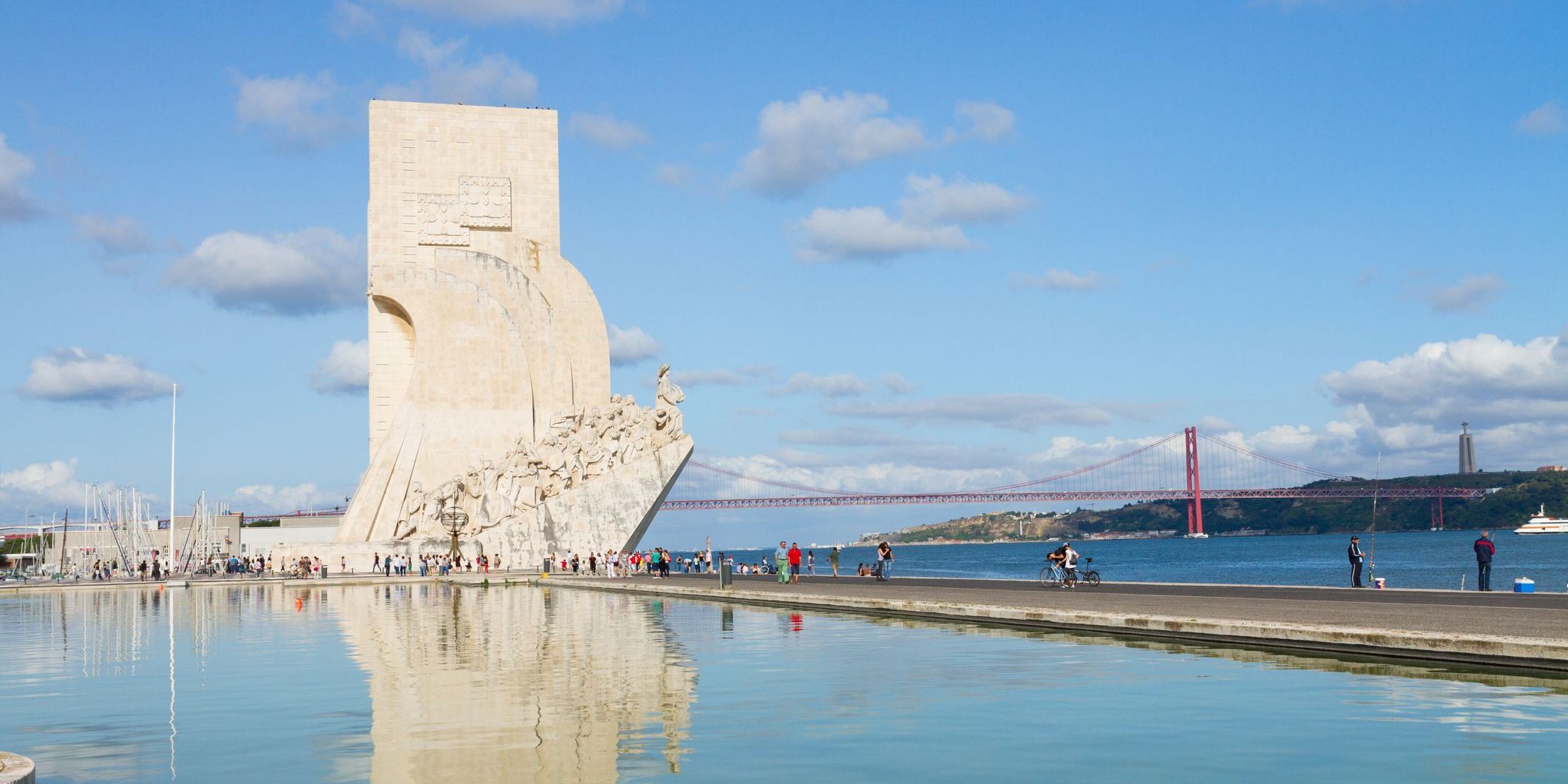
The Monument to the Discoveries Lisbon Portugal is one of those landmarks you’ve probably seen in photos of the city before you even arrive. It stands right beside the Tagus River in Belém, shaped like the prow of a ship pointing toward the Atlantic. The setting alone tells you a lot about Lisbon’s past. For centuries, this stretch of river was the departure point for Portuguese ships heading out on long voyages.
Locally, the monument is known as Padrão dos Descobrimentos, and it honours the explorers, navigators and cartographers who helped turn Portugal into a major maritime power during the 15th and 16th centuries.
Most visitors see the monument while exploring Belém, an area that holds several of Lisbon’s most famous historic sights. If you’re mapping out your time in the city, the guide to Lisbon sightseeing is a good starting point for connecting the main landmarks.
What to See at the Monument of Discoveries Lisbon Portugal
When you first approach the Monument of Discoveries Lisbon Portugal, the scale of the structure is the first thing you notice. The monument rises about 56 metres high and stretches forward like the bow of a ship pointing into the river.
Along both sides, you’ll see a line of stone figures. At the front stands Prince Henry the Navigator, holding a small ship. Behind him are explorers, scientists, missionaries and members of the royal court who played roles in Portugal’s maritime expansion.
Each figure represents a different part of the story. Vasco da Gama, who opened the sea route to India, appears among the group, along with Ferdinand Magellan and several navigators who helped map the world during that period.
Just in front of the monument, the pavement features a large marble compass and world map. Many visitors stop here to trace the routes taken by Portuguese explorers across the oceans. It’s one of the more interesting details in Belém because it gives some visual context to the voyages the monument commemorates.
You can also enter the monument and take a lift to the viewing platform. From the top, the view stretches across Belém. The Jerónimos Monastery sits just inland, while Belém Tower stands further along the waterfront.
The Story Behind the Sculptures of the Discoveries Monument Lisbon Portugal
Although the monument represents events from the 15th and 16th centuries, the structure itself is relatively modern. The original version of the Discoveries Monument Lisbon Portugal was built in 1940 for an exhibition celebrating Portuguese history.
That early version was temporary. The monument standing today was completed in 1960 to mark the 500th anniversary of Prince Henry the Navigator’s death. Architect Cottinelli Telmo designed the structure, while sculptor Leopoldo de Almeida created the figures.
There are 33 figures in total. Each one represents a historical figure connected to exploration or the expansion of Portuguese trade routes.
Some of the characters hold navigational instruments such as astrolabes and maps. Others carry swords or books, reflecting their role in exploration, science or religion.
The figures are arranged so that they appear to be advancing toward the river together. This layout reinforces the theme of Portugal moving outward into the unknown during the Age of Discovery.
Visitor Information for the Monument to the Discoveries in Lisbon
The Monument to the Discoveries in Lisbon sits in Belém, roughly six kilometres west of the city centre. It’s part of a historic area that attracts a steady flow of visitors throughout the year.
Opening hours change slightly depending on the season, though the monument usually opens mid-morning and closes in the early evening. Entry to the viewing platform requires a small ticket (€10 for adults which includes entry to the viewpoint, exhibition, and a film), while the outdoor space around the monument is free to visit. You can purchase tickets online via the official monument website.
The riverside promenade around the monument is wide and pleasant to walk. Many people spend time strolling along the waterfront before continuing toward Belém Tower or the Jerónimos Monastery.
If you want a quieter experience, arriving earlier in the morning is usually the best option, especially during the summer months.

Getting to the Monument to the Discoveries Lisbon Portugal
Reaching the Monument to the Discoveries Lisbon Portugal from central Lisbon is straightforward.
Tram
Tram line 15 is the route most visitors take. It runs along the riverfront from Praça do Comércio and Cais do Sodré toward Belém. From the tram stop, the monument is only a short walk away.
Train
Another option is the suburban train from Cais do Sodré to Belém station. From there you can walk along the river for about ten minutes until the monument comes into view.
Bicycle
Cycling is also popular. A dedicated riverside cycle path runs between central Lisbon and Belém, offering uninterrupted views across the Tagus.
Car
Driving from central Lisbon to the Monument to the Discoveries Lisbon Portugal takes around 10–15 minutes via the riverside road toward Belém. There is a large parking area directly beside the monument, making it easy to stop if you’re exploring the district by car.
Many visitors combine the monument with other attractions in the area before heading back into the city. If you’re planning to explore beyond Lisbon, the landscapes described in the guide to Sintra-Cascais Natural Park show another side of the region just outside the capital.
Why the Monument to the Discoveries Lisbon Portugal Is Worth Visiting
The Monument to the Discoveries Lisbon Portugal works well as both a historic landmark and a viewpoint along Lisbon’s waterfront. It also helps visitors understand why the city became such an important maritime centre during the Age of Discovery.
Standing beside the Tagus River, you can see how Lisbon’s geography shaped its role in exploration. The river opens directly toward the Atlantic, making it a natural departure point for ships leaving Europe.
For many travellers, Lisbon is just the beginning of a wider journey through Portugal. From the capital it’s easy to explore coastal towns, national parks and historic regions such as those described in the guide to Serra de Arrábida Setúbal.
If you’re planning a trip to Portugal, browsing the Allure Villas collection is a good place to start. The portfolio includes villas and holiday accommodation across the country, giving you a comfortable base for exploring Lisbon and landmarks like the Monument to the Discoveries at your own pace.