
 Home
Home Our villas
 About us
 Services
 Owners
  Investors
 Join us
 About Portugal
 Loyalty Program
 Blog
Blog Contacts
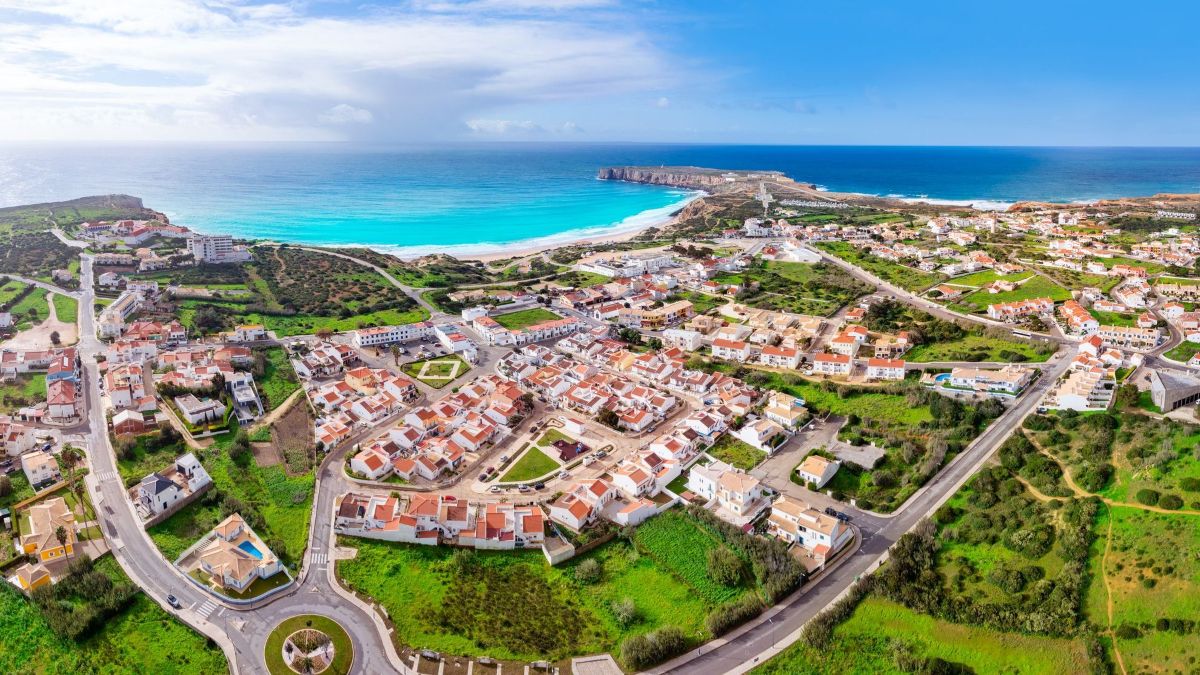
Sagres sits at the southwestern tip of Portugal, where the Algarve runs out of land and the Atlantic takes over. The resort towns further east feel like a different country from here. Sagres is spare, wind-beaten, and largely uncommercialized. Sagres beaches reflect all of that.
The geography shapes everything. Cabo de São Vicente, the most southwesterly point on mainland Europe, divides the coast into south-facing and west-facing stretches, and the difference is significant. South-facing beaches are sheltered, calmer, and fractionally warmer. West-facing ones absorb the full weight of open ocean swell, which is why surfers keep making the drive.
Knowing which beach to head to on a given day is most of the planning. The Sagres Portugal beaches don’t behave like one another, and treating them as if they do leads to wasted mornings.
Best Beaches in Sagres for Families
Praia da Mareta
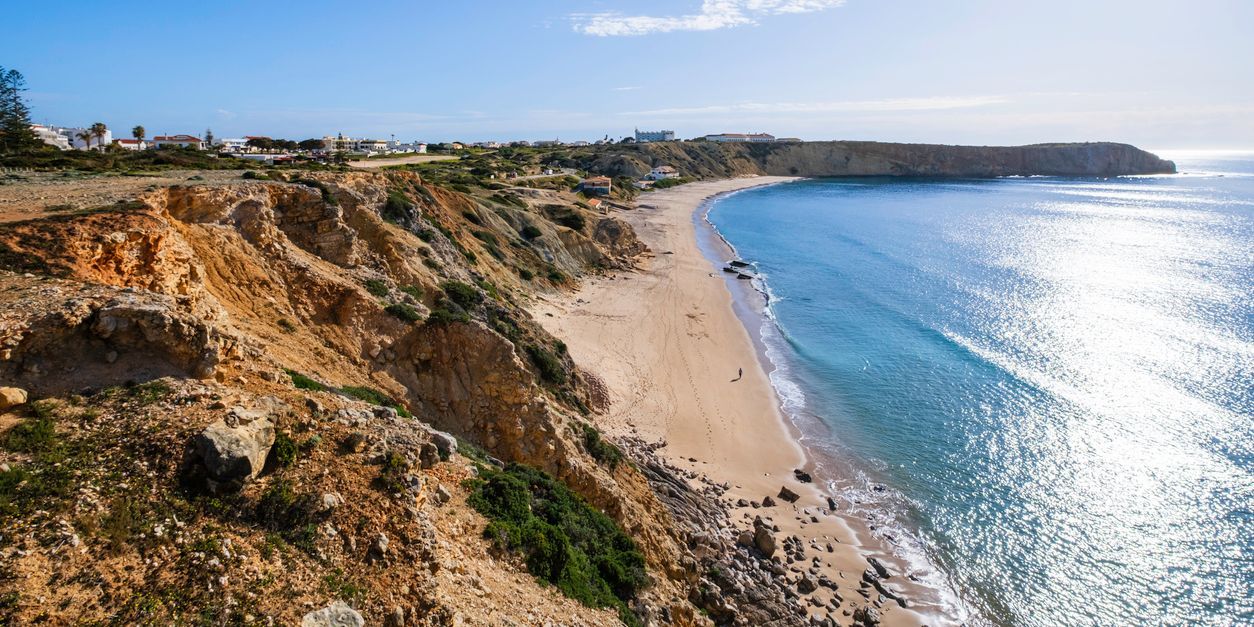
Praia da Mareta is where most visitors start. It’s the closest beach to the town centre, sheltered by rocky headlands on either side, and stretches for around 800 metres of sand. The south-facing bay keeps the worst of the Atlantic wind off, and the water is calmer here than anywhere else nearby. Lifeguards cover the beach in summer, there are restaurants right on the sand, and parking is close. For a family day without complication, it’s the obvious pick.
Praia do Martinhal
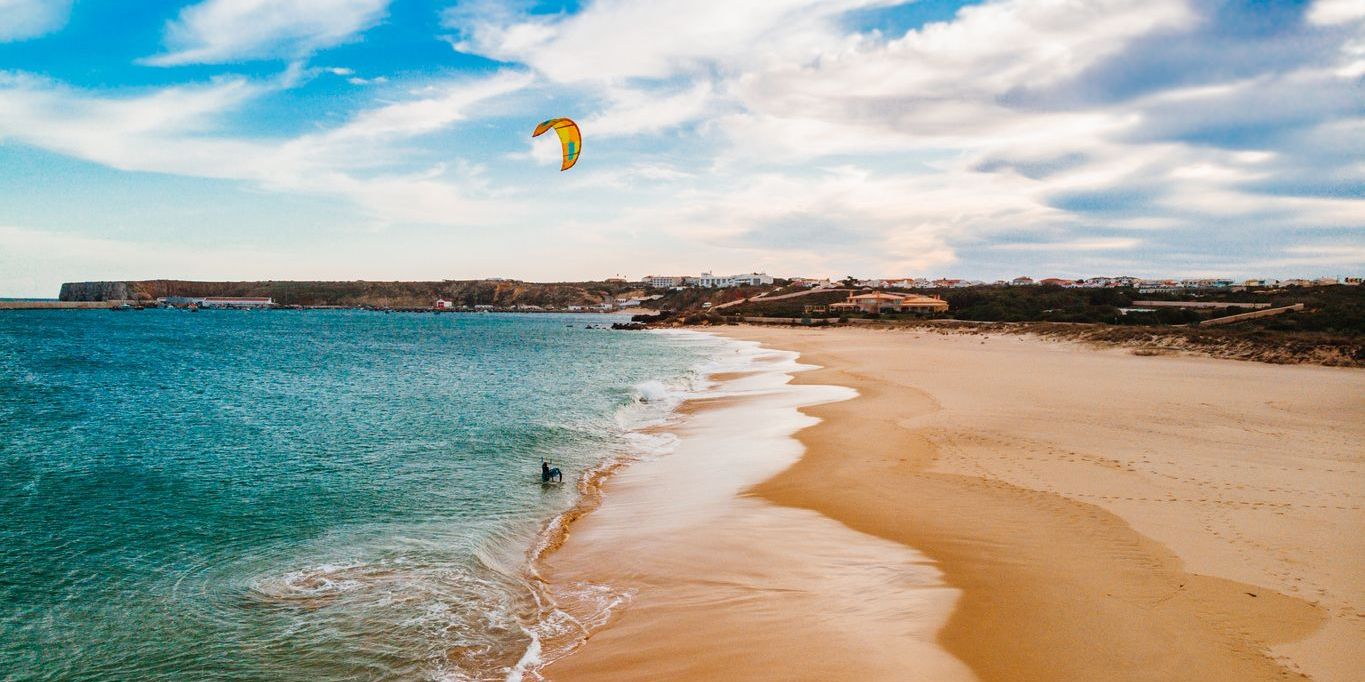
Praia do Martinhal, a short drive northeast along the N268, tends to attract families who need genuinely calm water. The beach sits in a sheltered bay, the sand is soft, the sea is shallow and deepens slowly, and the beach holds both the Blue Flag and the Portuguese Golden Flag environmental certification. Windsurfers use the conditions here regularly, though the beach is wide enough that it doesn’t intrude on everyone else. A cluster of limestone islets sits just offshore, and the underwater caves around them are popular with snorkellers and divers.
Top Surf Spots: Praia do Tonel and Praia do Beliche
Praia do Tonel
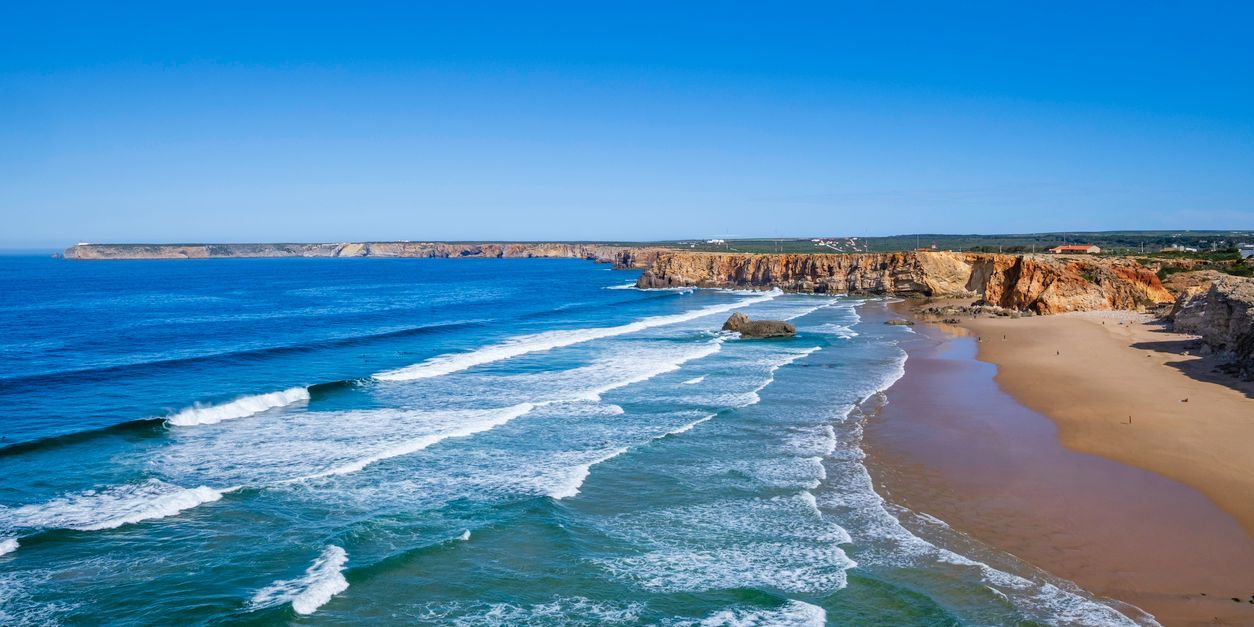
Praia do Tonel sits directly below the Fortaleza de Sagres, facing west into open ocean. It’s the main surf beach in town so it’s consistent, well-used, and close enough to walk from the centre.
The waves can be powerful, and the currents are serious; this is not a beach for casual swimming, particularly for children, even in summer.
Surf schools run sessions here through the season, and more experienced surfers use it year-round. Lifeguard cover is in place during summer months.
Praia do Beliche
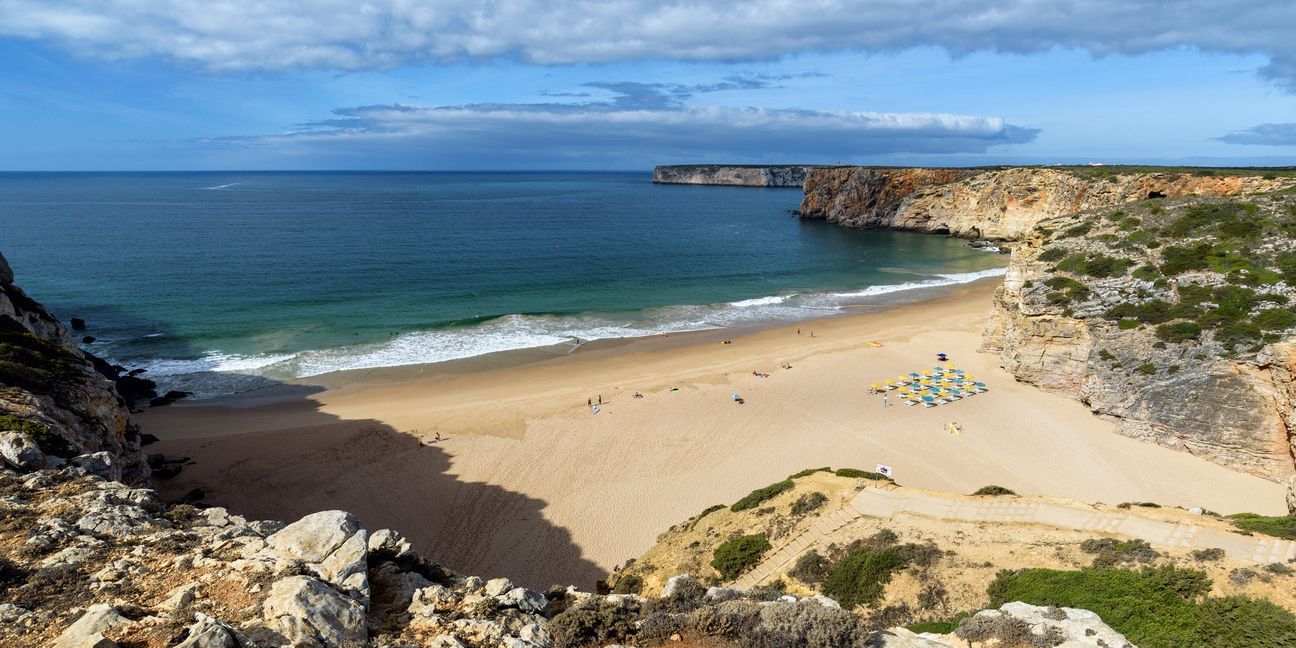
Praia do Beliche lies about three kilometres northwest of town on the N268 road towards Cabo de São Vicente. Getting down to the sand involves a steep staircase from the car park above, and that descent keeps it noticeably quieter than Tonel.
The surrounding cliffs provide some shelter from the wind, and the waves are often a fraction more manageable. That said, on a big swell day, the difference is academic. There’s also a beach bar during the season. Check the forecast before driving out: conditions change quickly on this stretch of coast.
The water temperature across Sagres beaches sits around 19°C (66°F) in midsummer, considerably cooler than the eastern Algarve. If you’re planning any extended time in the water, a wetsuit makes it significantly more comfortable.
Coves near Sagres
The headland around Sagres hides a few smaller spots that don’t appear on most visitor itineraries. Prainha das Poças is one of them, a sheltered patch of sand tucked under the cliffs of the Ponta de Sagres, with the fortress visible from the beach. It’s small, and it disappears almost entirely at high tide, so timing matters. Better suited to adults than young children, and best approached with tide times checked in advance.
The coastline between Sagres and Cabo de São Vicente also holds sea caves and cliff formations that are only visible from the water. A boat trip from the harbour is the most practical way to reach them, and the caves along the Algarve coast in this section of the Vicentine Coast are among the most impressive in the region, particularly at low tide when light filters in at angles you wouldn’t expect from above.
Practical Tips for Visiting Sagres Beaches
When to go
June through September is peak season, though Atlantic breezes keep summer temperatures more bearable than in the southern Algarve interior. Spring and early autumn bring fewer people, lower prices, and good weather. September in particular holds up well.
For surfing, the better swells arrive in autumn and persist through winter. For an overview of how the seasons play out across Portugal, the best time to visit Portugal guide covers the trade-offs in full.
Getting there
Sagres is roughly two hours from Faro by car, and about an hour from Lagos. There’s no rail connection, and bus services are infrequent and limited in range. A hire car is effectively essential if you want to move between beaches or explore the coast north towards Vila do Bispo. The drive on the N268 from Lagos is simple enough, and the landscape shifts noticeably as you close in on the cape.
Facilities
Mareta, Martinhal, and Tonel all have beach bars and seasonal facilities. Beliche has a bar in summer. The wilder beaches further north (Castelejo, Cordoama) have beach bars and parking but, beyond that, there are no facilities like the beaches closer to town.
Water Sports and Activities in the Area
Surfing gets most of the attention, but the water sports offering in Sagres has expanded considerably over the past decade. Local operators run kayaking, coasteering, and stand-up paddleboarding, with calmer conditions at Martinhal making it a sensible option for beginners. On settled days, snorkelling around the limestone islets is genuinely worthwhile.
Boat fishing trips depart from Sagres harbour, and you’ll see people casting from the rocks at various points along the cliffs. For days away from the water, the Fortaleza de Sagres merits a proper visit rather than a glance from the car park, and the cliff walk out to Cabo de São Vicente takes about an hour and earns its views.
Experience the Sagres Beaches for Yourself
Sagres Portugal beaches cover more ground than the size of the town suggests. You’ve got sheltered family bays, serious surf breaks, small coves that vanish at high tide, and a coastline that rewards both effort and patience. The whole area sits apart from the busier end of the Algarve, and for many people, that distance is exactly the point.
Allure Villas has a hand-picked collection of villas and apartments across the Algarve, from compact properties for couples to larger places suited to families and groups.
If this stretch of coast is on your radar, browse the full Allure Villas collection here.