
 Home
Home Our villas
 About us
 Services
 Owners
  Investors
 Join us
 About Portugal
 Blog
Blog Contacts
Praia da Aroeira sits on Portugal’s Atlantic edge, where the coastline turns rougher and the crowds thin out fast. It’s part of the Sintra-Cascais stretch, close enough to Lisbon for a day trip but far enough to feel removed once you arrive. There’s no beachfront development and no facilities waiting at the bottom.
It tends to attract walkers and surfers, along with people who are happy spending a few hours in the wild. If that sounds like your kind of stop, Praia da Aroeira delivers.
An introduction to Praia da Aroeira and its Atlantic setting
Praia da Aroeira lies within the protected coastline of the Sintra-Cascais Natural Park. The beach sits below steep cliffs, reached by a narrow path that drops down from the road above. You don’t see the beach until the final stretch of the walk, which keeps casual passers-by away.
The beach itself is long and wide, with coarse golden sand and strong Atlantic surf. Conditions change quickly depending on wind and swell. On calm days it feels expansive. On rougher days it becomes a shallow, working Atlantic beach, with powerful waves and a steady breeze.
You won’t find cafés or rentals here. Bring what you need. That lack of infrastructure is exactly why many visitors choose it over more accessible beaches closer to Cascais or central Lisbon.
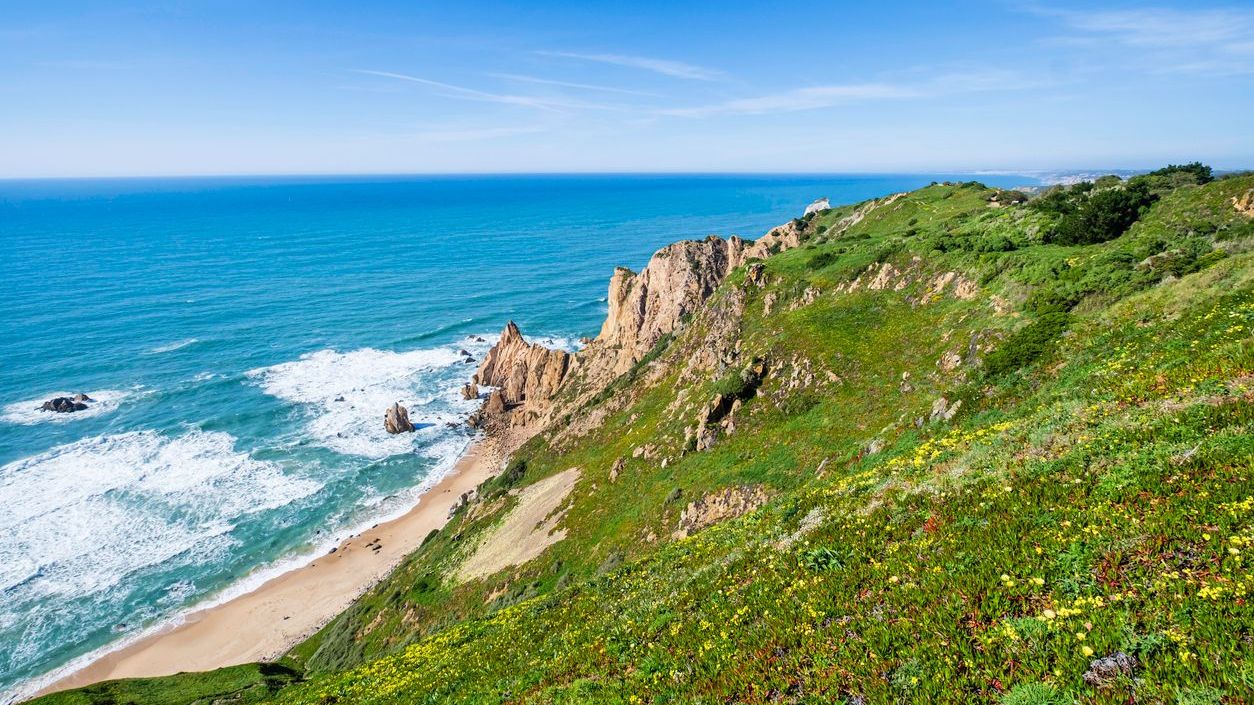
Stunning cliff views and Atlantic sunsets at Aroeira beach Portugal
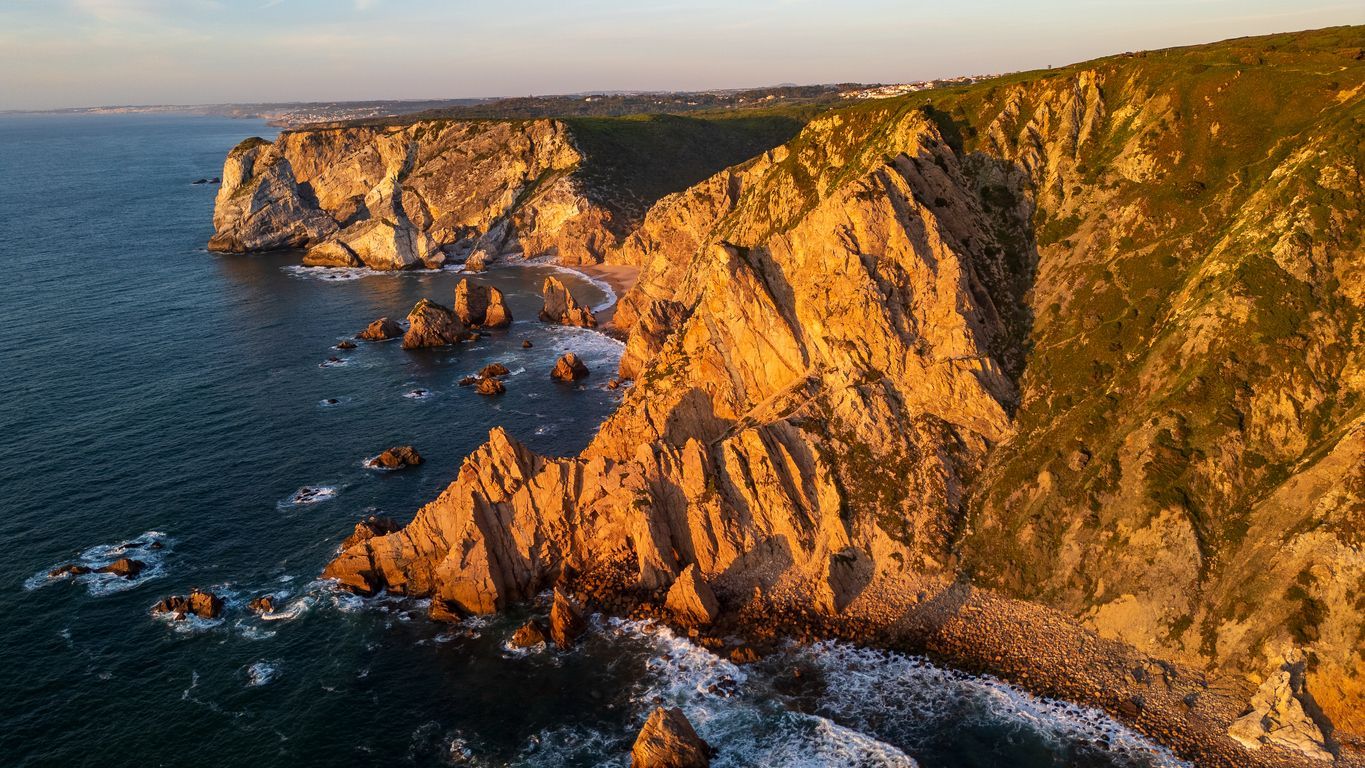
The scenery is what defines Aroeira beach Portugal. High cliffs frame the sand, with darker rock faces that catch the evening light. As the sun drops, the colour shifts from pale stone to deeper reds and browns.
Sunsets are best watched from the sand or from the clifftop paths above. The wind usually picks up later in the day, even in summer, so a layer helps. Photographers often arrive in the final hour before sunset.
If coastal landscapes are high on your list, it’s worth pairing this visit with other stretches featured in our guide to Beaches in Lisbon, where you’ll see how different the western edge feels compared with the city-facing coast.
How to get to Praia da Aroeira from Lisbon or Cascais
By car
Getting to Praia da Aroeira is straightforward if you’re driving. From Lisbon, take the A5 motorway towards Cascais and follow signs for the Sintra-Cascais Natural Park. The final section follows the N247 towards Cabo da Roca Lighthouse, the westernmost point of mainland Europe, passing through quieter, forested stretches of road.
Parking is informal and limited near the access path, especially during July and August. There’s more structured parking at the end of the road near the lighthouse.
By public transport
Public transport is possible but slower. The Linha de Cascais train runs frequently throughout the day and takes around 50 minutes from Lisbon to Cascais.
From Cascais, Carris Metropolitana buses cover the final stretch along the coast. The 1654 service runs from Cascais to Cabo da Roca Lighthouse via Sintra.
If you’re starting in Sintra, the 1253 bus runs directly from Sintra to Cabo da Roca Lighthouse.
Getting to the sand
From the drop-off or parking area, allow around ten minutes to reach the sand. The path is steep in places and uneven underfoot, particularly after rain. There’s no lighting, so visiting outside daylight hours isn’t recommended. Once you’re down on the beach, there’s plenty of space to spread out.
If you’re exploring the area more broadly, combining Praia da Aroeira with stops in Cascais Portugal or the Sintra-Cascais Natural Park makes logistical sense and keeps driving to a minimum.
Why Praia da Aroeira works as a peaceful coastal retreat
What stands out at Praia da Aroeira is how quiet it stays, even when nearby beaches are busy. There are no beach clubs, no organised activities, and nothing drawing passing traffic. Most people here are walking, surfing, or sitting with a book.
Surf conditions at Aroeira beach suit confident surfers rather than beginners. Swell can be strong, and currents change quickly.
Swimming conditions vary. There are no permanent lifeguard services, and waves often break close to shore. On calmer days the water is manageable for confident swimmers, but many visitors prefer to paddle or stay near the shoreline.
Outside high summer, the beach can feel almost empty during the week. Spring and autumn are particularly good times to visit.
If you’re planning a shoulder-season trip, our guides to Portugal in May and Portugal in September explain why these months suit slower coastal travel.
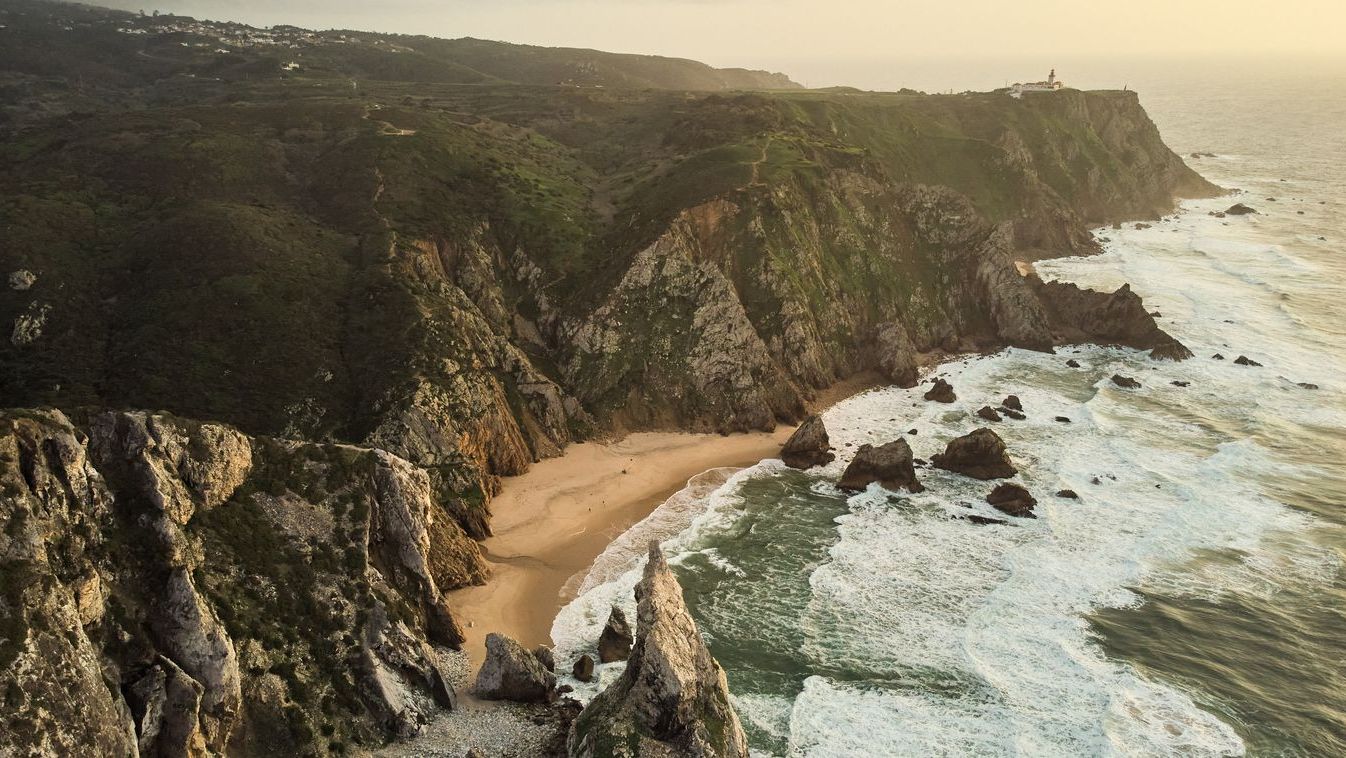
Hiking and coastal routes near Cabo da Roca and Praia da Aroeira
The coastline around Praia da Aroeira is well suited to walking. Clifftop paths link the beach with nearby viewpoints and longer routes along the Sintra coast. Trails are uneven in places, with loose stone underfoot, so proper footwear matters.
One well-used route runs from Cabo da Roca Lighthouse along the cliffs towards Praia da Aroeira, then continues north to Praia da Ursa. The walk is exposed for most of the way, with wide Atlantic views and very little shelter from wind. Clear weather makes a big difference to visibility and comfort.
Another longer route (4 hours, one way) is the Sintra to Cabo da Roca trail. The route takes in some of the wilder sections of woodland between the coast and Sintra, as well as some of the famous Sintra castles. It’s well worth trying out if you have the time.
For travellers keen to mix beaches with outdoor activity, our guide to things to do in Portugal covers similar coastal experiences across the country.
Discover Praia da Aroeira on your next visit to Portugal
Praia da Aroeira suits travellers who prefer beaches shaped by landscape rather than development. It works well as part of a Lisbon-area itinerary, especially if you’re splitting time between the city, Cascais, and the Sintra coast.
Choosing the right base makes a difference. Allure Villas offers a carefully curated collection of accommodation across Portugal, including coastal villas with sea views and quieter countryside properties within easy reach of the Atlantic. Staying in a private villa gives you flexibility, space, and a calmer end to the day after time outdoors.